Space & Physics
How a Black Hole’s Final Vibrations Put Einstein to the Test
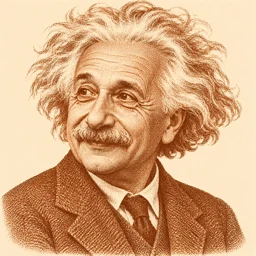
Two black holes merged. The fading ripples that followed gave physicists a way to measure how gravity behaves at its most extreme.
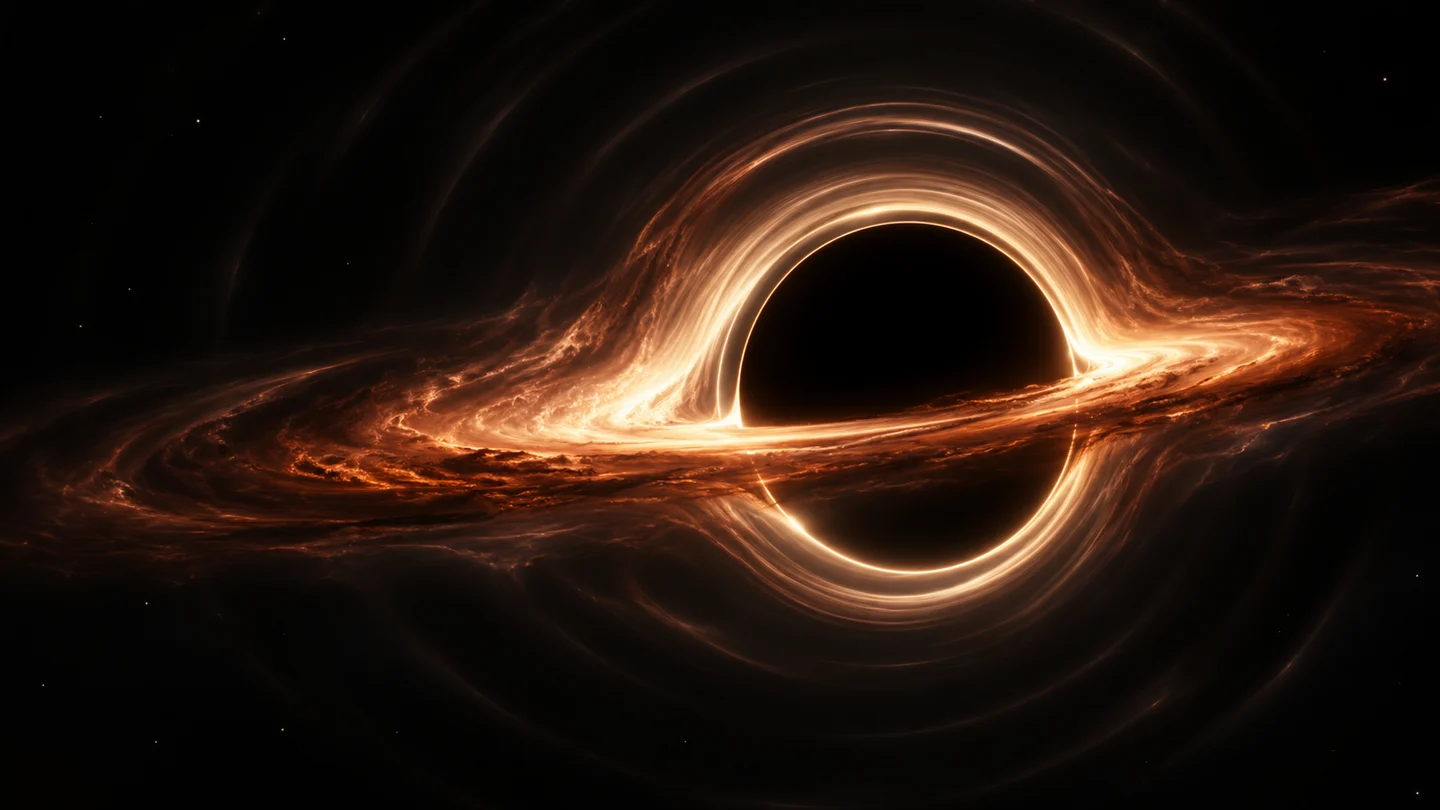
On January 14, 2025, both LIGO detectors picked up a signal from two black holes spiraling toward each other. Each weighed about 33 times as much as the Sun. The waves rose in frequency as the pair closed in. Then came the merger and a fading set of vibrations from the black hole it left behind. LIGO event analysis ↗
Anatomy of a merger
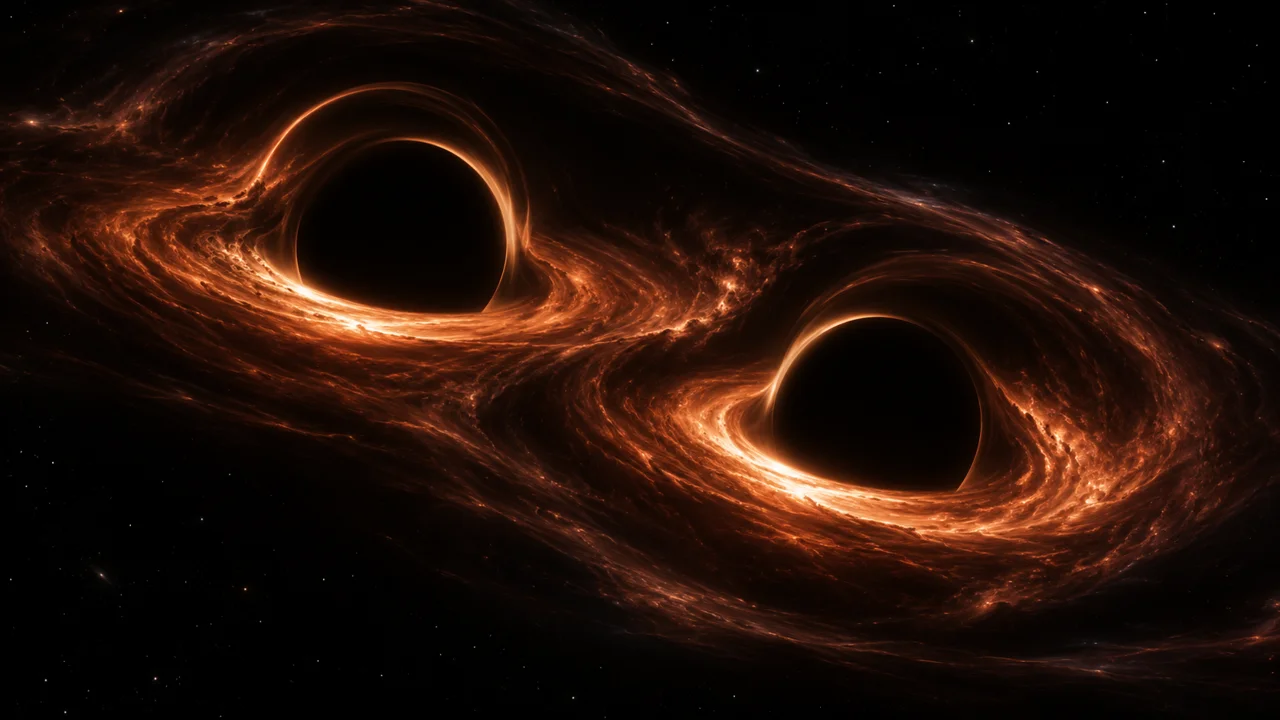
Inspiral
The black holes orbit faster as they lose energy to gravitational waves and draw closer.
Merger
The two black holes join, producing the strongest part of the signal.
Ringdown
The remnant settles as its characteristic vibrations fade.
Simplified sequence. Shapes and spacing are schematic. LIGO–Virgo–KAGRA study ↗
What Einstein predicted
Strike a bell and you can hear its pitch and how long it takes to fade. A freshly merged black hole has a similar signature in gravitational waves. General relativity predicts that the mass and spin of an isolated, uncharged black hole determine its characteristic frequencies and decay times. Measuring those properties is called black-hole spectroscopy. Physical Review Letters ↗
In its peer-reviewed January 2026 paper, the LIGO–Virgo–KAGRA team reported that at least two vibration patterns were needed to explain the post-merger signal. The dominant pattern and its first overtone were consistent with the prediction for a spinning black hole. Read the peer-reviewed study ↗
GW250114 · October 2026 follow-up
How close was the match?
Achal Kumar, Poulami Dutta Roy, and Sergey Klimenko reanalyzed the same collision using RingCWB. Their preprint estimated how far the dominant vibration’s frequency and damping time departed from Einstein’s predictions. Read the preprint ↗
Dots mark the best estimates. Bars show the quoted ranges, and the dashed line marks Einstein’s prediction. Exact values are in the table below. RingCWB preprint ↗
| Measurement | Best estimate | Quoted range |
|---|---|---|
| Frequency | +0.4% | −1.9% to +2.6% |
| Damping time | +1.0% | −7.7% to +10.6% |
Both ranges include zero deviation. The team pinned down the frequency more precisely than the time the vibration took to fade. RingCWB analysis ↗
What the next loud signal can tell us
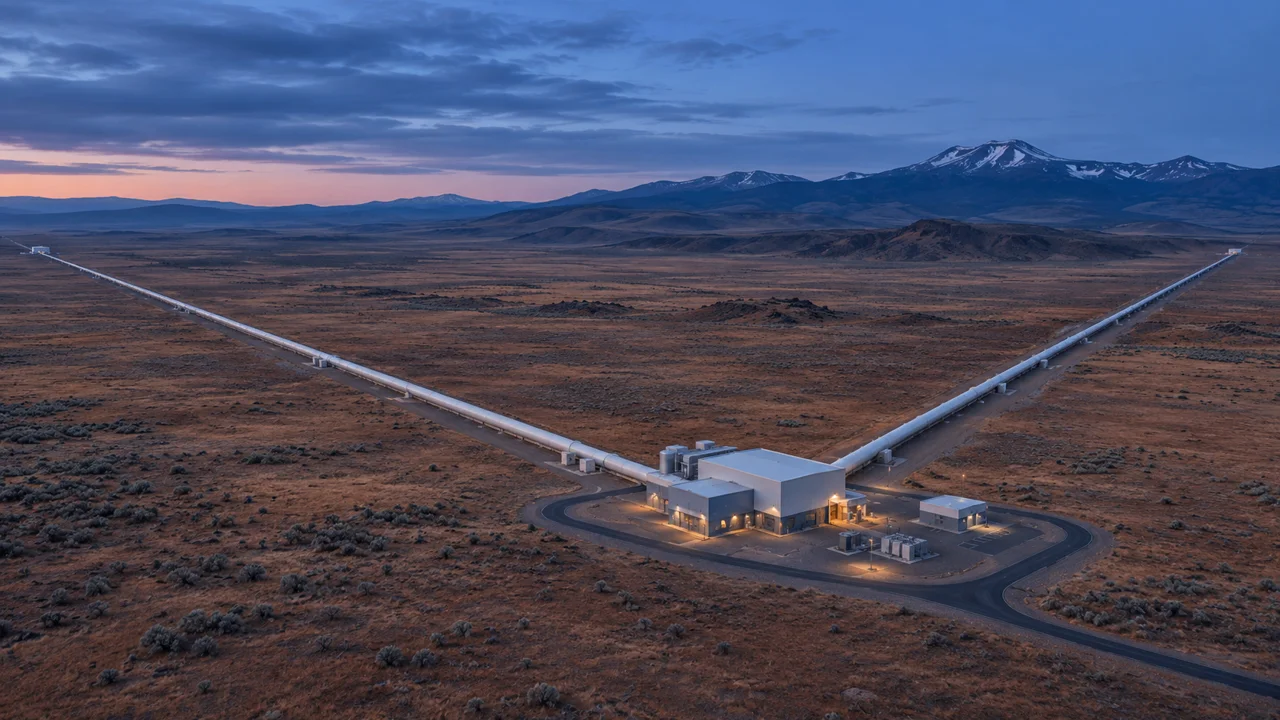
GW250114 gave researchers an unusually clear look at the same black hole with two analytical approaches. More loud mergers would let them repeat the test across black holes with different masses and spins. That matters because a pattern that holds across many events is easier to distinguish from a quirk of one signal or one analysis. LIGO–Virgo–KAGRA discussion ↗
Study links
- Black Hole Spectroscopy and Tests of General Relativity with GW250114 · Peer-reviewed, January 2026
- Ringdown analysis of GW250114 with RingCWB · arXiv preprint, October 2026
- GW250114 event analysis and source properties · LIGO document center