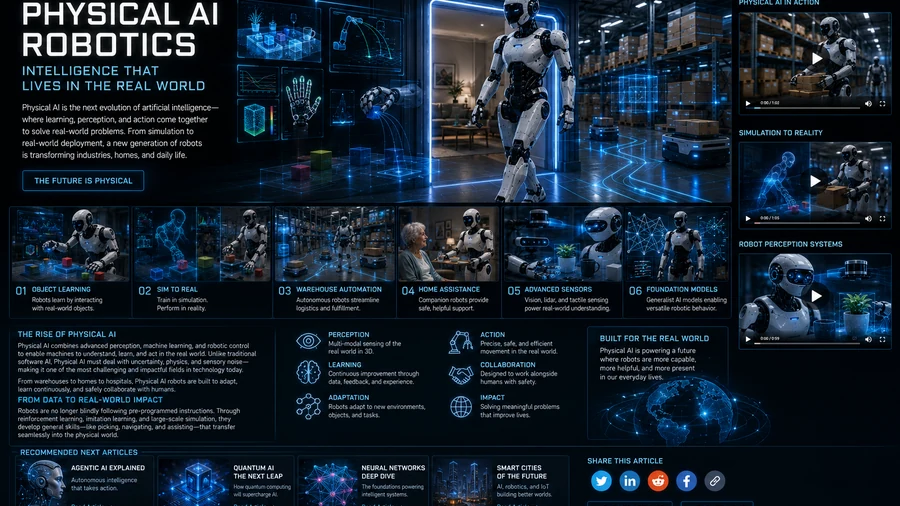
Artificial intelligence is leaving the screen. The next breakthrough is robots that can see, reason, grip, move, recover from mistakes, and work safely in real homes, warehouses, hospitals, and labs.
Physical AI is the part of artificial intelligence that has to survive contact with the real world. A chatbot only needs to arrange words. A robot has to understand weight, friction, balance, lighting, distance, grip force, human movement, and what happens when something slips.
That is the hard part. The real world is messy. A cup may be half full. A box may be crushed. A floor may be slippery. A person may step into the path. Physical AI is about giving machines enough perception, learning, and control to handle those changes without falling apart.
The big shift: robots are moving from fixed scripts to foundation models that can generalize across tasks. That means the robot is not just repeating one programmed move. It is learning patterns it can reuse.
This is why humanoid robots, warehouse bots, home assistants, and elder-care robots are all suddenly connected to the same story. The winning robots will not just have stronger motors. They will have better world models.
01 Object Learning
Robots learn by touching the world.
A real robot has to understand shape, grip force, and where an object can safely be held.
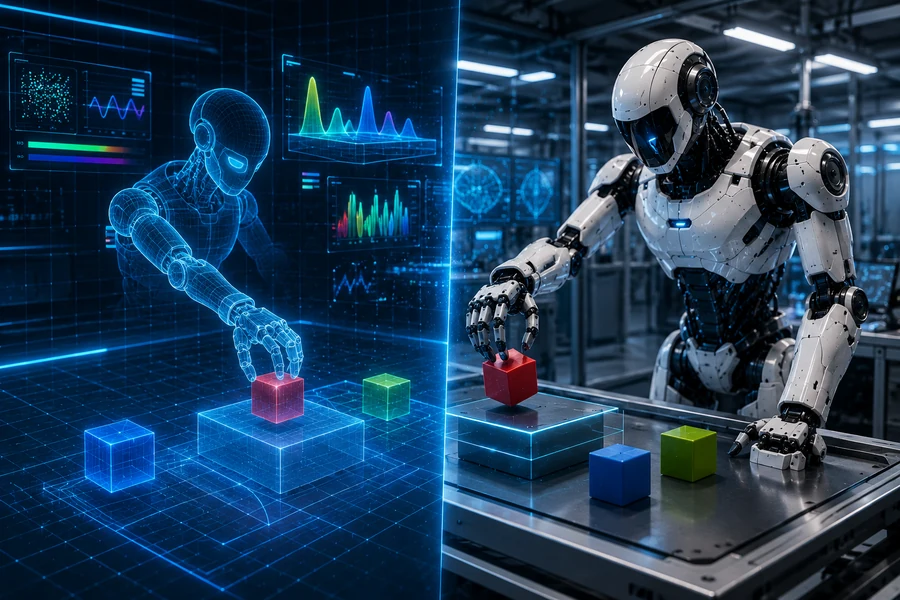
02 Sim to Real
Simulation is the training gym.
Robots can practice millions of attempts digitally before transferring skills into real hardware.
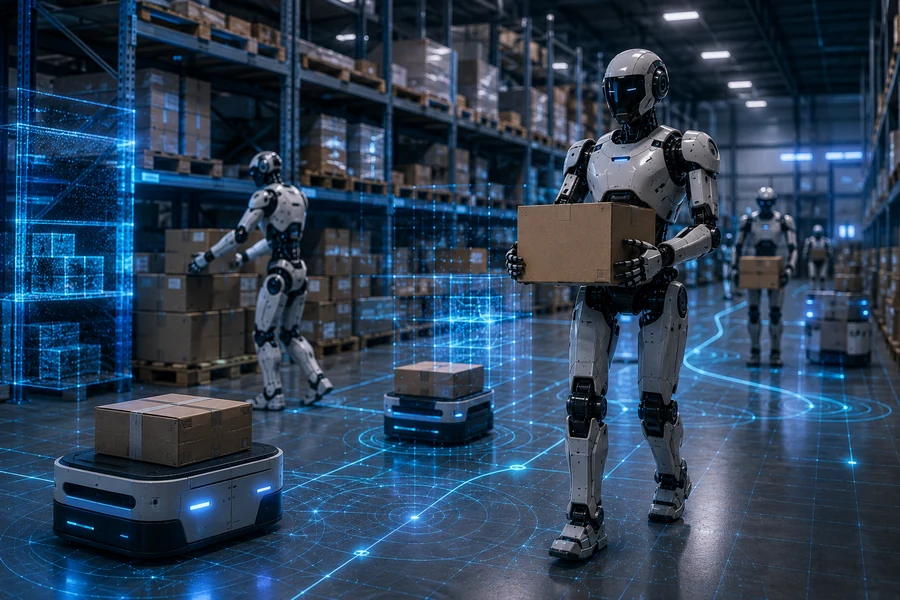
03 Warehouses
Logistics will feel it first.
Warehouses have repetitive jobs, clear goals, and enough structure for early Physical AI deployment.
04 Home Care
The home is the final boss.
A useful home robot must work around pets, clutter, people, stairs, furniture, and changing routines.
05 Sensors
Seeing is not enough.
Robots need depth, touch, force feedback, and fast perception to avoid dangerous mistakes.
06 Real World
The future is physical.
The strongest AI systems will not just answer questions. They will help move the world.
Why This Is Bigger Than Another Robot Demo
Older robots were usually trapped inside carefully controlled routines. They worked best when the lighting, object position, and task stayed almost the same. Physical AI changes the target. The goal is a robot that can take a broad instruction, understand the scene, and choose an action that makes sense.
Think about the difference between “move arm to coordinate X” and “pick up the red block without knocking over the glass.” The second instruction requires vision, language understanding, physics intuition, planning, and fine motor control. That is why robotics is now merging with foundation models.
For the reader, the key thing to watch is not just whether a robot looks human. Watch how it handles mistakes. Can it re-grip? Can it notice when something moved? Can it keep working when the scene changes? That is where the real progress shows up.
Where You Will See It First
Warehouses: sorting, tote handling, shelf movement, inventory support, and package handling.
Factories: machine tending, inspection, material movement, and repetitive assembly support.
Homes: fetching objects, basic chores, reminders, and companionship. This will take longer because homes are chaotic.
Care environments: safe assistance, medication reminders, telepresence, fall detection, and daily support. This area matters, but safety has to come first.
Watch Physical AI in Action
These pop open in the WolfieWeb video lightbox instead of throwing the reader off the page.
Physical AI is not hype just because the phrase sounds flashy. It is the natural next step after language models, vision models, and robotics control finally started colliding.
The honest truth: we are not at household robot paradise yet. These systems still struggle with cost, reliability, safety, and edge cases. But the direction is clear. Robots are becoming less like machines that follow a script and more like machines that can learn how the physical world works.