Soft by design
Made to flex, not fight the body
This kind of sensing system fits the robot instead of forcing the robot to fit the sensor.
Soft Robotics • WolfieWeb Mobile
If you are looking for the moment soft robotics starts feeling real, this is it. This squishy robotic eye shows how flexible materials can do more than move—they can focus, react to light, and bring machine sensing closer to the way living systems work.
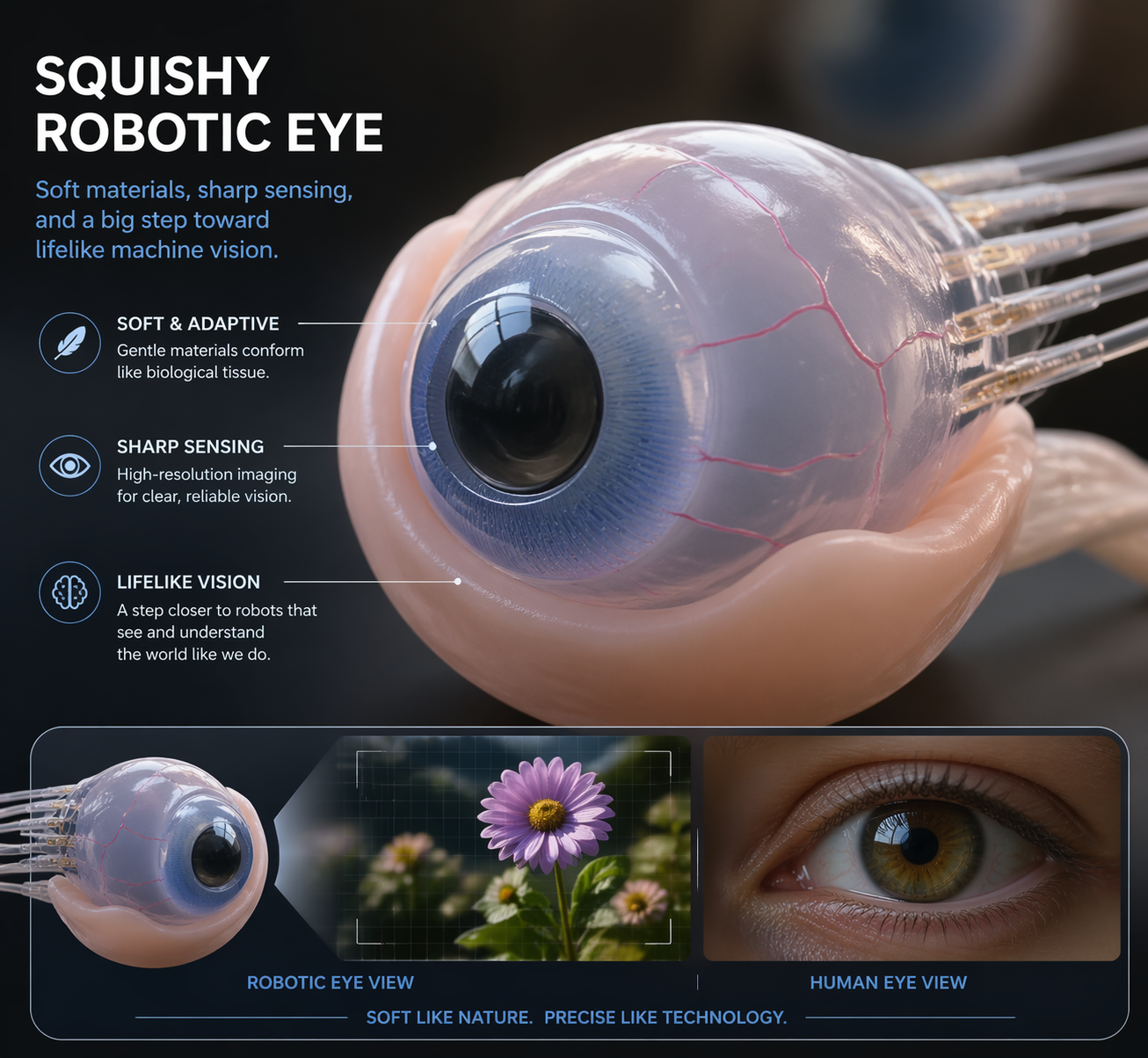
Most robot vision systems are built around rigid cameras, stiff components, and electronics that do not naturally belong in soft machines. This concept flips that thinking around. Instead of forcing a hard sensor into a flexible body, the sensing system itself becomes part of that softer design language.
That matters because future robots will not all be metallic, boxy, and built only for factories. Some will need to move safely around people, work with delicate materials, navigate tight biological spaces, or respond to environments where rigid hardware simply is not the best fit. A soft robotic eye points straight at that future.
Soft by design
This kind of sensing system fits the robot instead of forcing the robot to fit the sensor.
Smarter sensing
The exciting part is not just sharper vision. It is the idea that sensing can become more lifelike, adaptive, and body-aware.
Real-world value
Soft robotic sensing could matter in surgical tools, clinical devices, wearables, and machines that need a gentler touch.
What makes this exciting: this kind of soft lens technology opens the door to robots that do not just see the world—they sense it in a way that better matches the body they are built into.
This image gives you the core idea instantly: soft materials are no longer just for movement. They can become part of the sensing system itself.
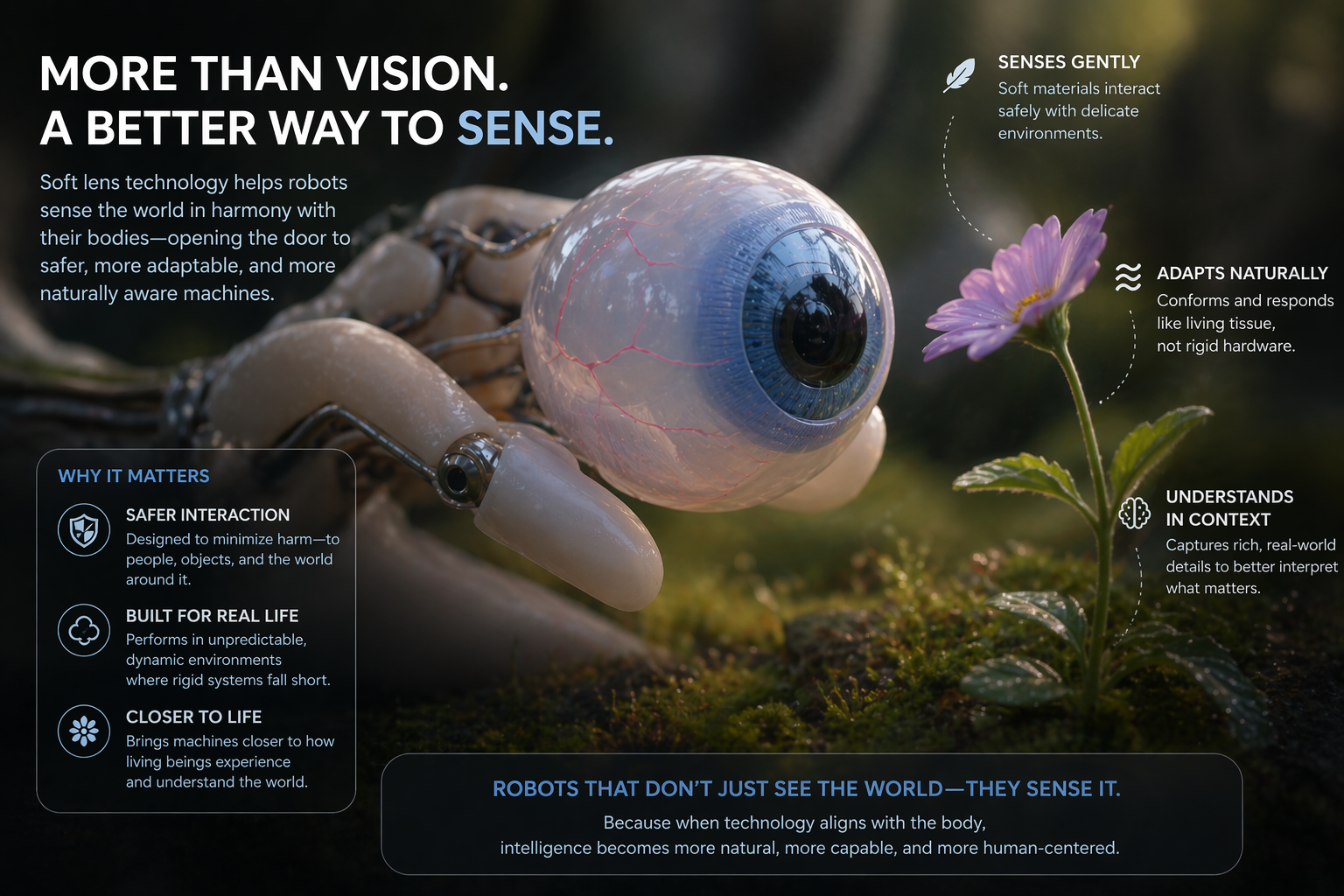
This is where the concept gets interesting. A softer sensing tool can work in ways that better match flexible robots, delicate environments, and more natural interaction.
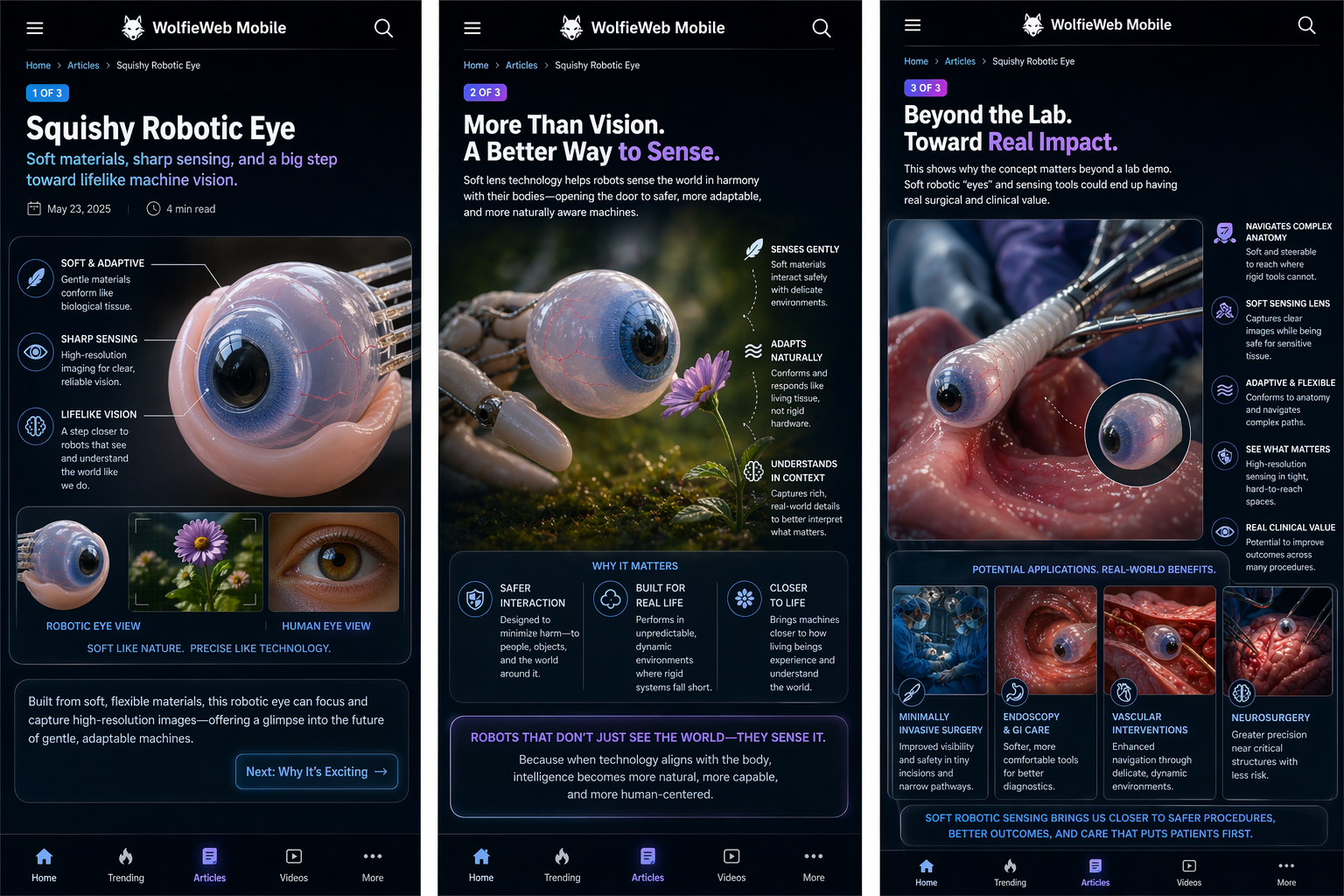
This is the leap beyond the lab. Soft robotic eyes and sensing tools could end up helping in surgical and clinical systems where safer, gentler navigation matters.
You are looking at more than a strange robot eye concept. You are looking at a shift in design philosophy. Instead of separating sensing from the rest of the machine, researchers are starting to blend the two together so robots can respond in ways that feel more organic, more compatible with soft bodies, and potentially more useful in sensitive settings.
That is why this kind of work stands out. It points toward robots that are not only better at gathering information, but better at gathering it in the right way for the environment they are built to operate in.
Start here if you want the most direct look at the exact concept. This video shows why a soft, light-responsive robotic eye is such a big deal.
This one helps you connect the dots between the eye itself and the broader push toward smarter, more adaptive machine sensing.
This shows why the idea matters beyond a lab demo. Soft robotic sensing tools could eventually have real surgical and clinical value.
When you finish this article, these are the strongest next reads on the mobile site.