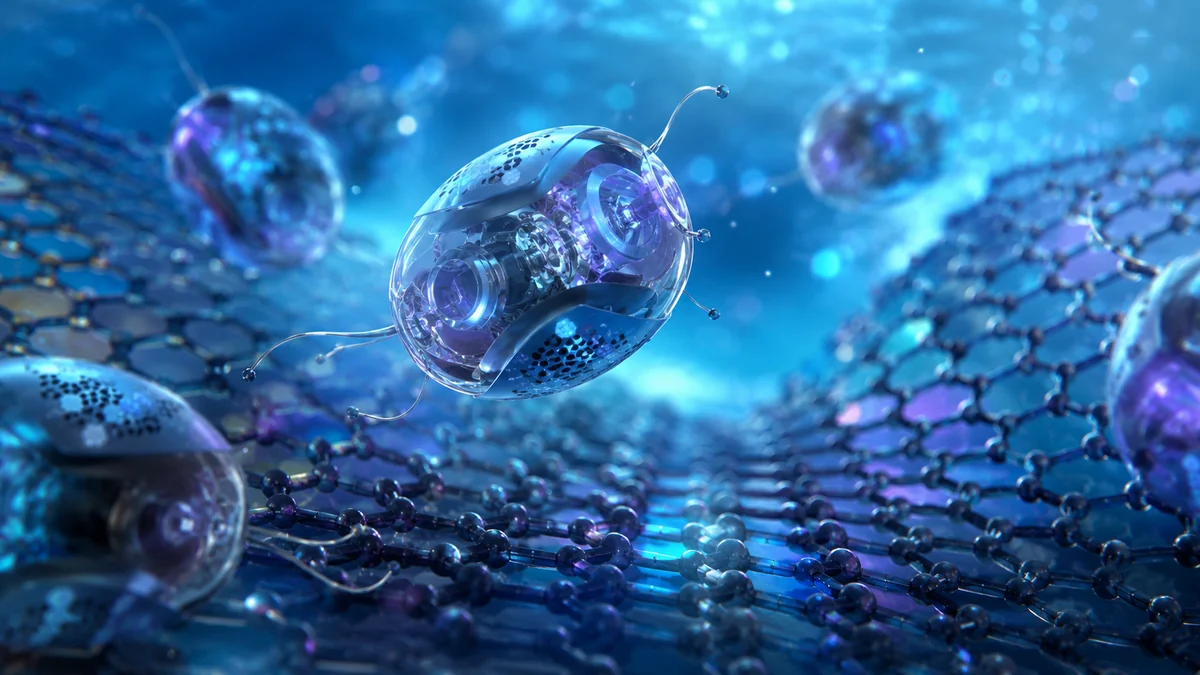
MIT researchers developed a way to mass-produce tiny robotic devices no bigger than a cell. The team calls them syncells, short for synthetic cells. The big idea is simple but powerful: build microscopic devices that can travel through hard-to-reach environments, collect information, and later be recovered or read.
Click/tap images to enlarge. Use your site image folder path: /images/.
What are syncells?
Syncells are tiny synthetic-cell devices designed to behave like microscopic information collectors. They are not little metal humanoids, and they are not swimming around with tiny arms. Think of them more like smart particles: small devices that could carry sensors, memory, and eventually more advanced electronics.
The MIT work is important because earlier versions of these devices could be made, but not easily at scale. A robot technology becomes far more useful when you can make thousands, millions, or eventually swarms of devices consistently.
How MIT’s method works
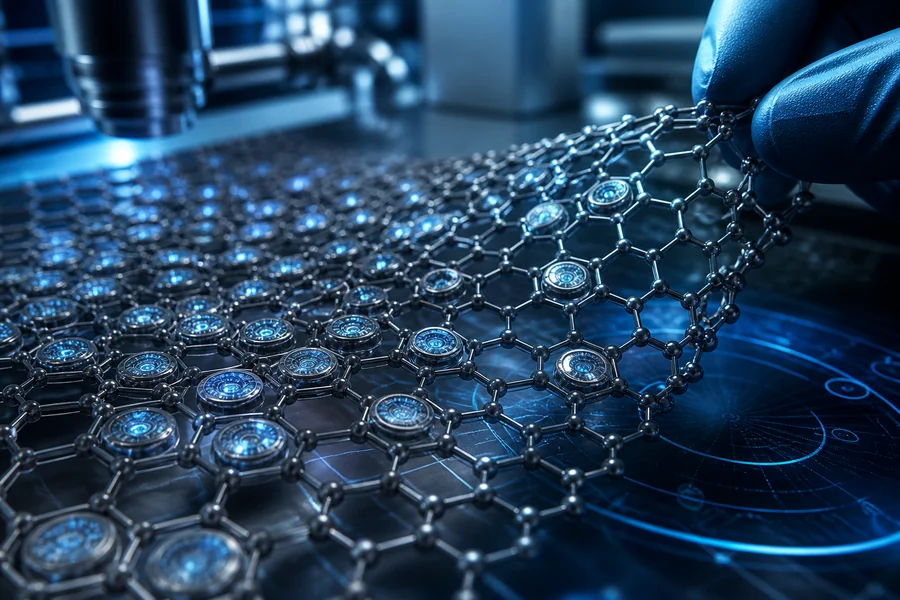
The clever part is that the researchers used a weakness as a tool. Graphene is often described as incredibly strong, but very thin graphene sheets can also be brittle. MIT’s team used controlled stress and fracture to separate tiny pieces from a sheet, creating small independent devices.
That matters because manufacturing microscopic machines one at a time is a dead end for real-world use. You need batch production. MIT’s approach points toward a way to produce many cell-sized devices quickly and accurately.
Why pipelines are a smart first target
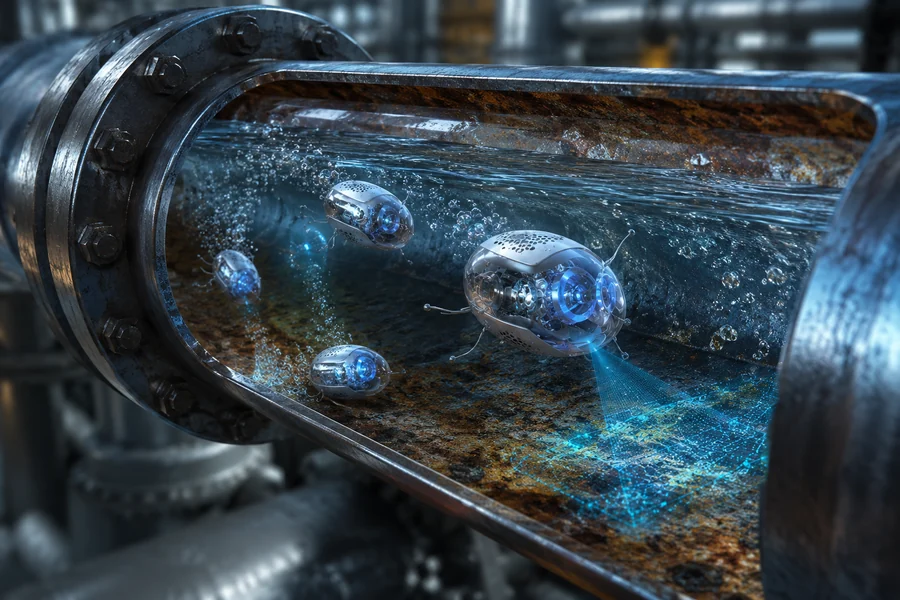
Oil and gas pipelines are huge, harsh, and difficult to inspect from the inside. A swarm of tiny sensor devices could be released at one end, drift with the flow, collect data about pressure, chemistry, corrosion, or leaks, and then be recovered downstream.
That kind of inspection could be safer and cheaper than sending larger tools into every section. It also shows why these devices do not need to “think” like full robots to be valuable. Sometimes the most useful robot is simply the one that can go where people and bigger machines cannot.
Could they search for disease in the bloodstream?
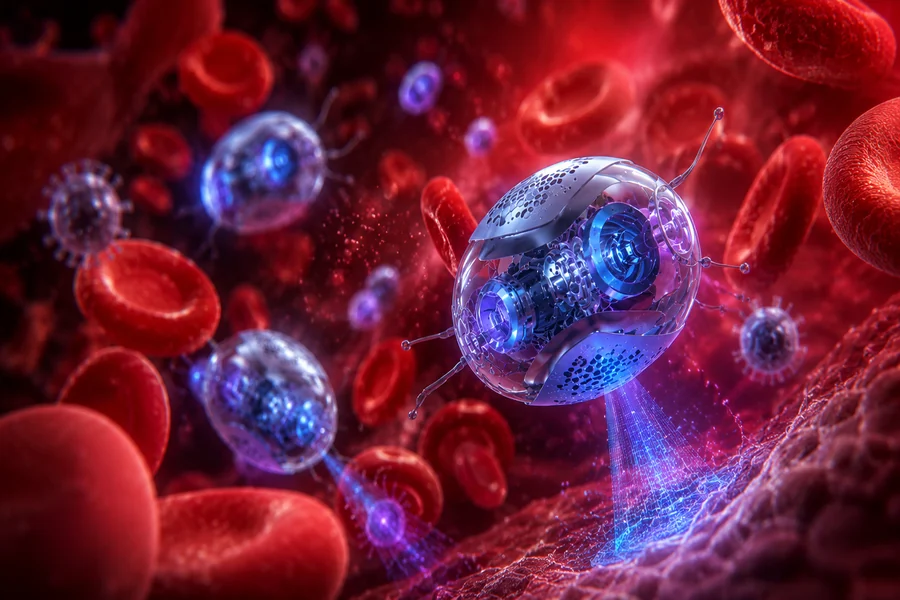
The medical idea is exciting, but it needs caution. Floating through the bloodstream to search for signs of disease is a future possibility, not a finished hospital tool. The body is complicated. Any microscopic device would need to be safe, biocompatible, trackable, readable, and removable or degradable.
Still, the concept is powerful: tiny devices could someday detect chemical signals, inflammation markers, infection clues, or early signs of disease from inside the body. That would be a major leap for diagnostics.
The memory trick
MIT’s demonstration included the ability to write information into a syncell memory array and later read it back. That is a huge deal. A tiny sensor is more useful when it can carry a record of what it experienced.
Imagine sending microscopic scouts through a pipe and reading their stored data after they come out. You would not need every device to transmit constantly. It could simply collect and remember.
What still has to be solved?
The hard problems are real: powering microscopic robots, communicating with them, controlling where they go, making them safe in biological environments, and manufacturing them at industrial scale. None of that is trivial.
But this research moves the field forward because it attacks one of the biggest bottlenecks: how to make these tiny devices in large numbers. Without scalable production, microscopic robotics stays trapped in the lab.
Featured Videos
These videos are now real embedded players, not thumbnail placeholders. They stay responsive on desktop and mobile, so the section should not collapse or blow out the page width.
Final takeaway
Syncells are a clean example of where robotics is heading: smaller, smarter, and built for places humans cannot reach. The best part is not the hype. The best part is the manufacturing idea. If researchers can mass-produce microscopic devices reliably, then pipeline inspection, environmental sensing, and future medical diagnostics all get a new kind of tool.