f X
Photoreal futuristic smart city banner showing glowing towers, intelligent transport systems, and advanced urban robotics
WolfieWeb Feature

Living in a Smart, Robotic City

You are not just looking at one robot, one smart building, or one clever gadget here. You are looking at an entire urban environment designed to think ahead. Traffic responds in real time. Delivery systems move with less friction. Homes adapt to your routine. Maintenance happens faster because the city can spot problems earlier.

That is what makes a smart robotic city worth paying attention to. It is not just visual spectacle. It is a daily-life upgrade that could make the place you live feel smoother, safer, and more responsive the second you step into it.

Daily LifeLess waiting, less friction, less wasted motion.
Urban AITraffic, logistics, and building systems react in real time.
RoboticsDelivery and maintenance become visible parts of city life.
Smart HomesYour living space becomes part of the city’s intelligence layer.
Why this matters to you: this page works best when it pulls you into the city and shows you what the technology would actually change once you live with it every day.

What a Smart City Would Really Feel Like

If you lived in a truly smart city, the biggest difference would not be flashy screens or robotic mascots on every corner. It would be the feeling that the city is finally reacting to real conditions instead of staying frozen until something breaks. You would spend less time stuck in traffic because signals and routes could respond instantly. Public systems could adapt faster. Buildings could use energy more intelligently. The whole city would feel less clumsy.
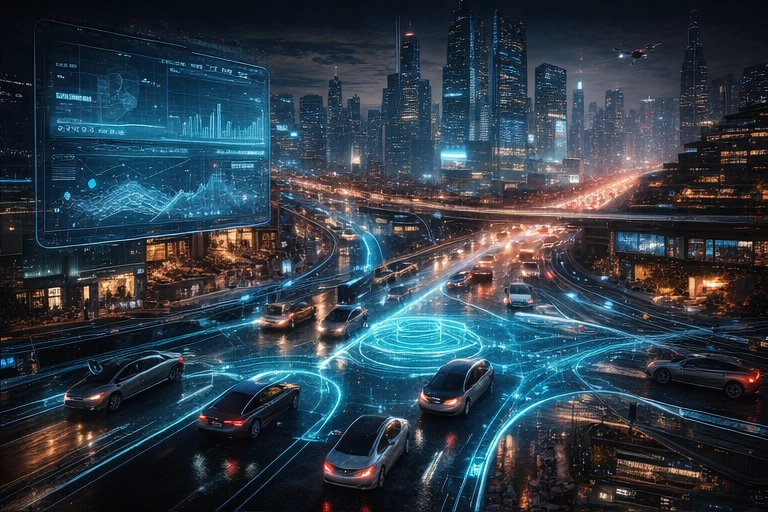
Photoreal AI traffic control system managing a futuristic smart city intersection
A smart city starts feeling real the moment traffic stops behaving like a blunt instrument and starts reacting to actual conditions.
TrafficYou spend less time stuck because routes and signals adjust to live demand.
PowerBuildings use less wasteful energy because systems react instead of running blindly.
SafetyConnected systems can flag problems sooner and trigger faster responses.
AccessDesign can better support older adults and disabled residents instead of working against them.

How Your Home Fits Into the City

A smart city gets personal the minute the technology reaches your front door. That is where the idea stops feeling abstract. Your home could become part of a wider connected system that helps you manage comfort, reminders, energy use, safety, and accessibility without forcing you to juggle a mess of unrelated devices.
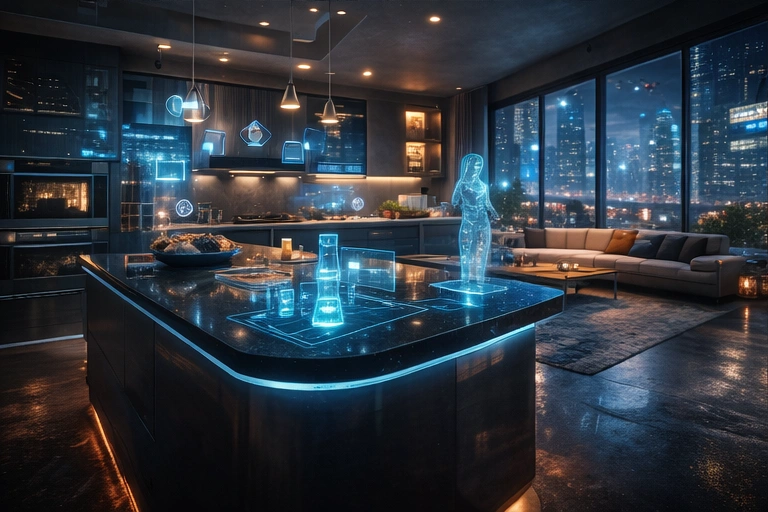
Photoreal futuristic smart home interior with adaptive lighting and intelligent living systems
The best smart-home design does not just look advanced. It makes your daily routine easier and less draining.

That matters even more if you care about aging in place. A responsive living space could reduce routine strain, improve reminders and safety, and make independence easier to hold onto for longer.

Where the Robots Show Up

This is the part that makes the city feel alive. Once robotics moves into public space, the whole concept becomes easier for you to picture. Delivery robots, automated maintenance systems, inspection tools, and support units turn the city into something more dynamic than static concrete and wires.
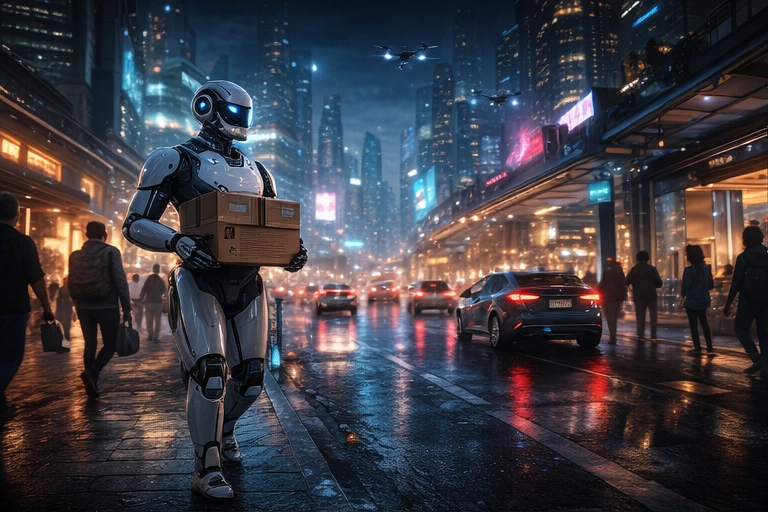

  • Delivery robots can keep short-range logistics moving in the background.
  • Maintenance bots can inspect and service systems more often than cities usually can afford.
  • Autonomous support tools make more sense once they are tied into live city data.
  • The city gets smarter when the machines inside it can actually act on what the data reveals.

Why the Main Banner Matters

The banner matters because it sells the scale of the idea. It shows you a city built around intelligence instead of patched together with gadgets after the fact. That is the whole point. This is not one smart light, one delivery robot, or one AI feature. It is an environment designed from the ground up to think and respond.
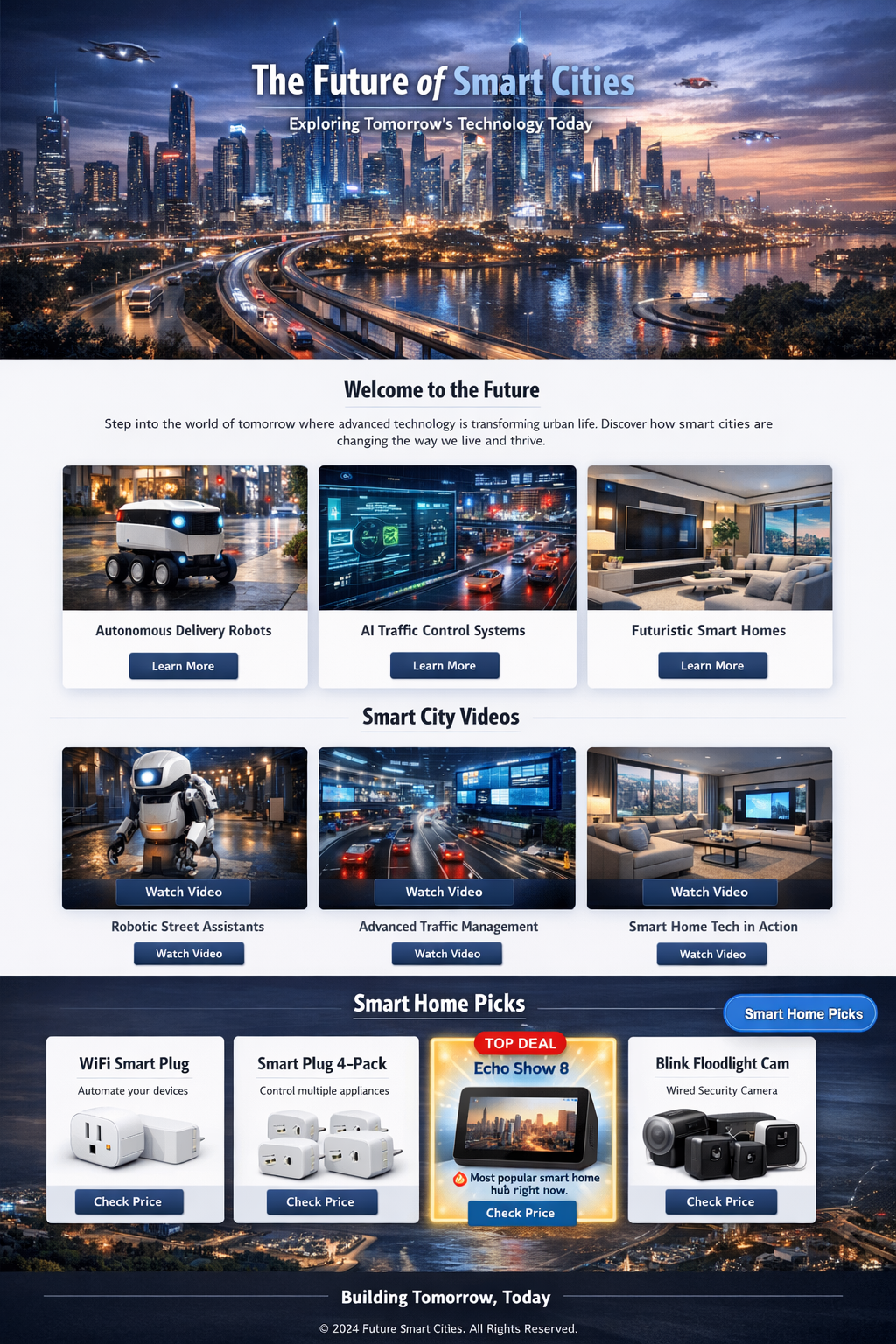
Photoreal futuristic smart city skyline showing integrated robotics and intelligent urban systems at scale
This is the same main photoreal banner restored as the hero feature and used again here where the article explains why scale matters.

That is also why projects like Toyota Woven City get so much attention. They move the conversation out of fantasy mode and into real-world testing. Once mobility, housing, automation, accessibility, and energy are designed together, you can finally judge whether the future is useful or just expensive noise.

Smart Home Picks That Fit This Page

If you want to make this article practical, these are the kinds of products worth looking at. They line up with the same ideas this page is showing you: smarter lighting, better monitoring, easier automation, and more connected everyday living.

Smart Plug

Single Smart Plug

Simple entry point into automation. Control lights, fans, or devices from anywhere.

View Product
Multi Pack

Smart Plug Bundle

Best value if you're building a full smart home setup across multiple rooms.

View Product
Voice Hub

Echo Show

Central control hub for your smart home with voice, automation, and display.

View Product
Security

Blink Floodlight Camera

Outdoor smart security with lighting and motion detection built in.

View Product
Security System

Blink Home Camera Kit

Full home monitoring system that fits perfectly into a smart city lifestyle.

View Product
Starter Kit

Smart Home Starter Kit

All-in-one bundle to kickstart automation, lighting, and control systems.

View Product
View Smart Lighting
Home Monitoring

Smart indoor camera or entry monitoring

This fits the security side of the page and makes the smart-city idea feel more personal at the home level.

View Monitoring Gear
Automation

Smart plugs and routine control tools

Small automation tools matter because they are cheap, practical, and easy for visitors to understand and try.

View Automation Picks

Reality Check

None of this helps you if the system becomes invasive, brittle, or outrageously expensive to maintain. A smart city can go sideways fast if privacy, cybersecurity, accessibility, and long-term upkeep are treated like afterthoughts.

What This Could Mean for You

The future city is not one giant jump. It is a stack of upgrades that slowly stop feeling optional: smarter traffic, better logistics, more responsive housing, more capable robotics, and infrastructure that reacts instead of waiting to fail. Put together, that changes how your city feels to live in.